
Interpreting Nostalgia: Forrest Gump
"it is a great mistake to see nostalgia as a passive, wishy-washy, rose-tinted yearning for the past"
Jeffrey Richards
Nostalgia can be described as a sentimental longing for a time or place from the past; one can feel this way when reliving memories, whether good or bad. Nostalgia is a theme often explored in cinema, with many films using it as a narrative device. Many theorists and academics have interpreted nostalgia, Jeffrey Richards stated “it is a great mistake to see nostalgia as a passive, wishy-washy, rose-tinted yearning for the past” (Richards, 1997, p.365). Richards' words acknowledge how nostalgia can often be looked at with tunnel vision, a purely romanticised notion, however there are other ways to look at this genre that offer further insight.
Nostalgia films often journey through the past; therefore, it is important to look at these films in regards to their historical specificity. It is also useful to explore the audience’s ability to critically participate in their viewing experience, particularly in recognising reconstructions of events. Lastly, there is question of whether the narrative of the nostalgia film allows the audience to adopt prosthetic memory. By using different methods to look at nostalgia, rather than a purely “rose-tinted yearning for the past” (Richards, 1997, p.365) a deeper understanding of this idea can be achieved.
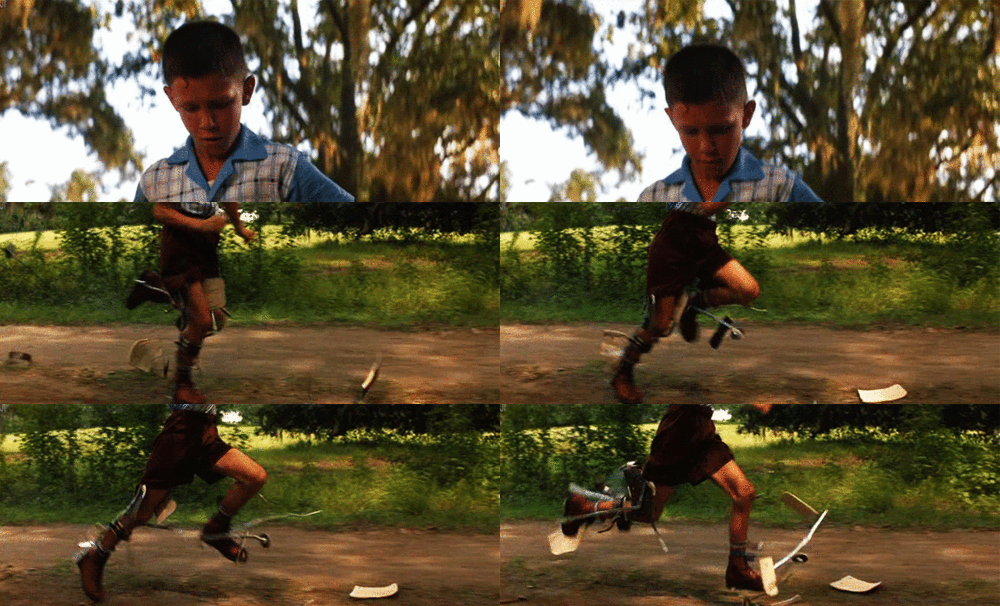
Nostalgia is embodied within Robert Zemeckis’ Forrest Gump (1994). Based on Winston Groom’s 1986 novel by the same name, the narrative follows Forrest , played by Tom Hanks, through his life as he recalls his memories to strangers on a bus bench. The audience journey through time from his childhood through to present day, experiencing his eventful life from being a football star, soldier to accidental millionaire. The story is told from Forrest’s memories and experiences, creating an emotional connection immediately which resonates with the audience. Forrest’s past is hindered with unrequited love and the death of loved ones, acknowledging both joyful and unhappy memories that are rooted in nostalgia.
An essential theorist to explore when looking at nostalgia film is Pam Cook. In her writing Screening the Past (2005), Cook highlights the distinctions between memory, history and nostalgia. Memory can be authentic, based from one’s own experiences. When thinking of Forrest Gump, the story is told from the characters point of view, which questions the accuracy of his stories as memory is subjective. However, Cook acknowledges that stories told from history are often stripped of fantasy and warmth. Whereas stories told from experience represent a character’s unique feelings and emotions from a past event, which encourages the nostalgia in Forrest Gump's narrative. Nostalgia is associated with loss, the idea that something is irretrievable. Cook discusses the idea that when recreating an experience, it is a form of role play, nostalgia is a re-presentation of the past. With nostalgia film, this reconstruction gives the audience the opportunity to participate, their viewing experience is based on their “critical assessment of the authenticity of the reconstruction” (Cook, 2005, p.3).
When applying this idea to Forrest Gump, it is specifically useful in the scenes where Forrest has been edited into famous historical footage, such as meeting various US Presidents. Multiple times throughout the film, Forrest’s achievements are marked by meeting the country’s leaders. For example, when making the All-American Football Team, Forrest goes to the White House to meet President John F. Kennedy. This footage is humorous as when shaking his hand, he uses this opportunity to tell the President he needs to use the bathroom. This superimposition of the character into this footage allows audiences to “consciously enjoy a playful or affecting engagement with history at the same time as exercising their aesthetic judgement” (Cook, 2005, p.4). Whilst enjoying the narrative, the audience can acknowledge that this is purely as a performative reconstruction, allowing for both comedic elements and opportunities to participate. Cook offers an interesting way to look at nostalgia film recognising audience response and participation as a vital element.

Linking with the ideas of audience participation and critical response, another interesting way to view nostalgia, that differentiates from the idea of a rose-tinted view, is the commodification of the past. This commodification is the use of iconography, music and fashion to evoke a sense of past or to signify a specific era. This interpretation came about after Frederick Jameson discussed the idea of nostalgia films presenting a “pseudo-historical depth, in which the history of aesthetic styles displaces real history” (Jameson, 1991, p.76). Jameson argues that filmmakers adopt the stereotypical iconography associated with a time in history, for example the 1980s, but disregard the historical specificity. Instead, focusing on a romanticised version of the past, not the political climate that may have affected life in that time.
This is interesting to apply to Forrest Gump as the film tells its story over many iconic years in history. It could be argued that this film does make the past a commodity to some extent. With the character of Jenny, played by Robin Wright, each decade is clearly defined in her fashion. However, this can be interpreted in two ways. The film covers a vast amount within the restraints of time, suggesting that the commodification is a way to show the audience the year in which a part of the story takes place and is a short hand narrative tool. Alternatively, this could be a comment on the character of Jenny; this character has had trauma in her life and is lost, and so lends herself to, in some way, what is popular to find where she belongs. Jenny aspires to be a famous singer, then a peace activist and then becomes a waitress; each different path she tries to take lends itself to iconography within her fashion. For example, her attire when a peace activist is iconic of the Flower Power movement of the 1960’s and 1970’s. Each time she comes back into Forrest’s life, her image is different and is iconic of the year when the story takes place.


In the same way, Vera Dika discusses the mise-en-scene that is often utilised to signify a time period; “lighting, the choice of colours, and the grain of the film, as well as its composition and framing, may all be manipulated to refer to past images” (Dika, 2003 p.10). This is relevant for Forrest Gump as throughout, there are changes to the grain and warm hue on screen, especially when looking back at his childhood, which create distinction between time periods. This is often used in film to evoke a sense of past, often the warm hue enhancing the sentimentality of the memory.
However, the film is not apolitical. Forrest Gump acknowledges history in abundance, with reference to the assassination of John F. Kennedy, and the attempted assassination of many other presidents. Similarly, when meeting Lieutenant Dan, played by Gary Sinse, a montage is shown as Forrest explains that nearly every male in Dan’s family history fought and died in an American war. This acknowledges conflict throughout the ages and the impression it has on civilians, seen later in the film when Dan is injured in Vietnam and is saved by Forrest. In what immediately follows, the audience witness Lieutenant Dan yelling that Forrest robbed him of his destiny - to die in the field with honour, as his ancestors did. What is more, the film addresses slavery when Forrest meets Bubba (1:45), played by Mykelti Williamson, as Forrest’s narration informs the audience that Bubba’s ancestors were house slaves.
Linking back to the ideas of the audience recognising the story as a reconstruction, a scene in which Forrest interferes with the Watergate Scandal under Reagan’s presidency is important. The audience are aware that this did not actually happen, but for the purpose of the story, it works to address the political issues that were significant at the time. Whilst the film borrows iconography and fashion to signify a time period, it does so with a purpose and similarly addresses many of the great issues both surrounding the time the film is set and before, in accordance with individual characters. This film text disproves Jameson’s theory, to a degree, that all nostalgia films simply adopt aesthetic commodification and an apolitical approach to their narratives.
Whilst considering Jeffrey Richards’ idea of the mistake of looking at nostalgia with a rose-tinted view, it is important to acknowledge that not all nostalgia is joyful. Forrest Gump looks back on difficult times, specifically Forrest’s experiences with death. Svetlana Boym discusses two ideas of nostalgia; Restorative and Reflective. The former is seen as a way to put everything back together, to create a wholesome and happy space and time. The latter “cherishes shattered fragments of memory” (Boym, 2001) which can be applied to this text. The can be seen in the parts of his life that are more negative, heart-breaking and in a way ‘shattering’. Forrest’s life is shown to embody hardship, from being bullied at school into teen years, to witnessing the horrors of the Vietnam war and losing his best friend in battle. Additionally, losing both his mother and the love of his life in a similar way. The film heavily focuses on these moments. These events seem to be a crucial part of telling Forrest’s story, and he thinks back to them throughout the story as he relays his life to strangers.
In the same way, Boym discusses ideas of truth in these films and notes that “reflective nostalgia calls it into doubt” (Boym, 2001). When looking at this film, there are many moments in which this is exercised. Again, as the story is told from Forrest’s memories and experiences, there are times when it is clear his understanding of situations are not completely accurate. For example, Forrest did not reach the intelligence quotient needed to attend school and his mother wanted him to receive education in the same way as every other child. In Forrest’s retelling of this scenario, the camera work offers the audience a different version of the story. Whilst Forrest is sat outside the headteachers office, his mother, played by Sally Field, is seen inside talking to the headteacher. On screen, the spaces are separated with shots inside the office allowing the audience to hear the conversation and Forrest shown at a significant distance, with a wall separating them.
This can, in some way, be treated as a split screen with one side representing the truth and the other being Forrest’s understanding. Whilst the audience are shown the reality of his mother offering sexual favours for Forrest’s education, it is contrasted with his narration suggesting his mother was able to simply convince the headteacher. This links with the idea of reflective nostalgia in the way that it calls the truth into doubt, in this instance, the truth of Forrest’s recollection.
Memory can be seen as inauthentic due to the subjectivity of its nature, however, going back to Cook, she discusses that memory provides an experience which comes with authenticity and emotional power. This emotional power, when used on screen to tell stories, is what supports the audience’s ability to take on what is referred to as Prosthetic Memory, explored by Alison Landsberg. The idea of Prosthetic Memory is explained as the ability of an audience to suture themselves into a greater history that they never personally experienced. This offers an opportunity for viewers to take on a unique and deeply felt memory of an event they did not live through, again there is no option for passivity with Gump’s audience. The experiences explored in Forrest Gump offer this opportunity for prosthetic memory as his story travels through many significant years. With such an eventful life, playing football, fighting in Vietnam, going to college and starting his own business in Bubba Gump Shrimp Co. there is a plethora of experiences that an audience can relate to.
In particular, his experience in Vietnam shown on screen is extremely immersive. The combination of erratic camera work ranging from extreme low shots and canted angles, with close ups on level with Forrest himself, and loud and layered sound design of bombs and gunfire allows the audience to position themselves with Forrest in the midst of the battle. Although the vast majority of audiences watching Forrest Gump are unlikely to have fought in the Vietnam War, the film offers an opportunity to adopt a prosthetic memory. In the same way, as the film shows Forrest’s experiences with childhood, love and death, these are recognised as universal themes that “encourage reflection in audiences” (Cook, 2005, p.5).
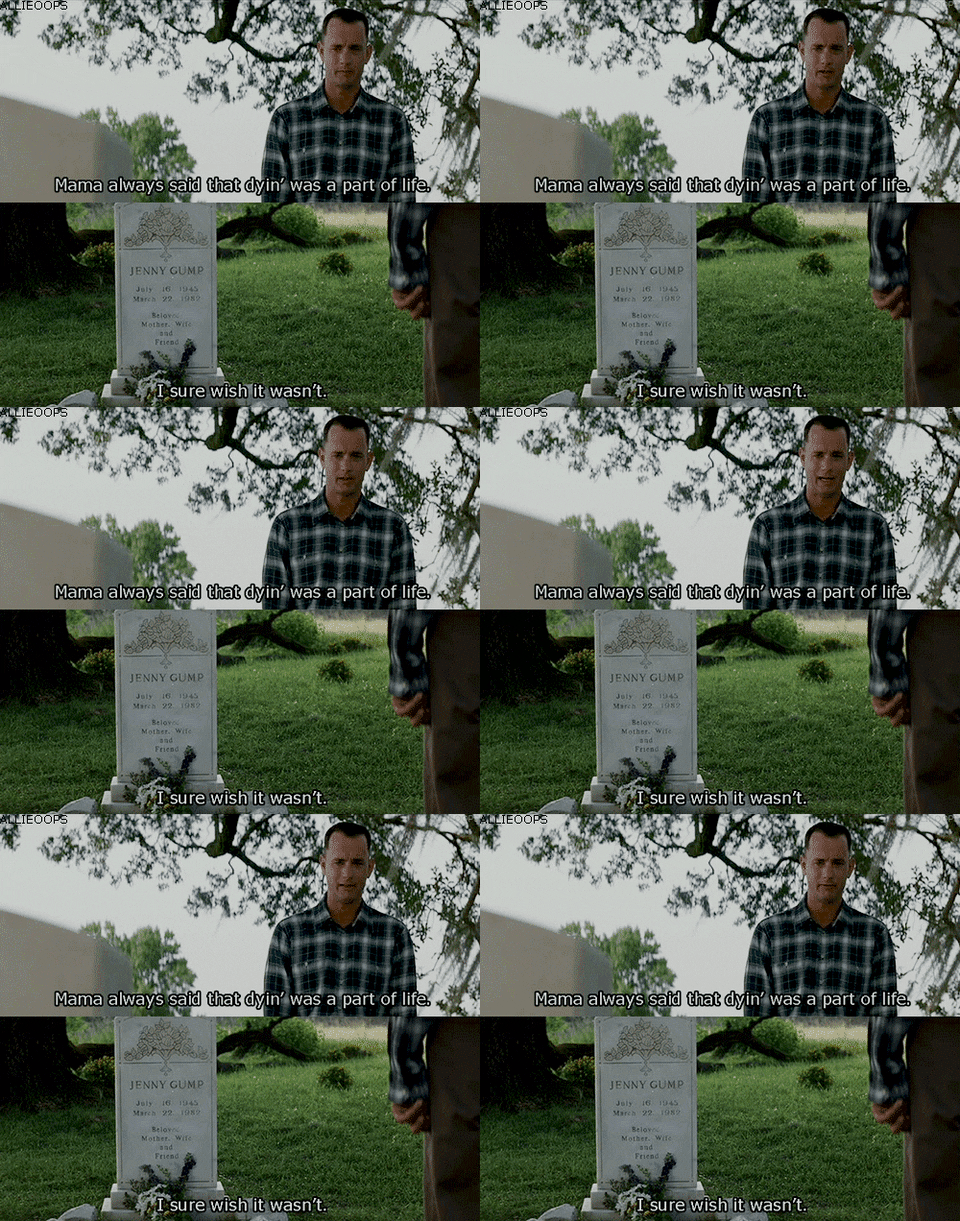
To conclude, Richards’ ideas pertaining to nostalgia are interesting and by looking at different methods of interpretation, there are debates that can arise. It would be a mistake to only look at nostalgia as a romanticised and apolitical notion, rather than exploring different elements such as joyful and sad memories to the commodification of the past, which can often shape this genre of film. Also, by applying these ideas to Forrest Gump, it allows for a greater understanding of the narrative and demonstrates how nostalgia can inform film making, allowing it to be analysed in film theory.
Interpreting Racial Identity:
Django Unchained
"Unfortunately, 'Post Racism' is also a myth" Justin Simien
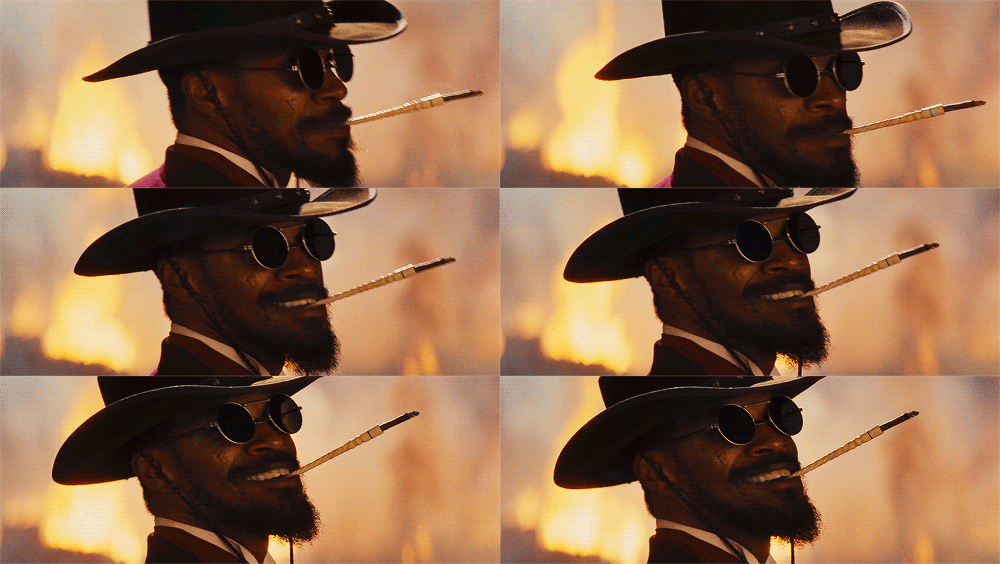
The term ‘Post Racism’ alludes to the idea that racism no longer exists within our society, that a time has come in which racial prejudice no longer exists. This term became especially prominent in 2008 when Barack Obama, the first black President of the United States of America, was elected. This pivotal moment in history ushered in what was thought to be the beginning of a ‘Post Racial Era’, especially in America. However, this was short lived as directly after Obama’s term, the controversial election of Donald Trump in 2016 relinquished the hopes of living in a Post Racial era, with policies based on white privilege and negative attitudes towards immigration. Justin Simien describes Post Racism as a myth and this can be seen in American society especially in regards to the Police. The myth of Post Racism can also be seen within film; although it is becoming more diverse with race and gender, there are still issues that mean black audiences struggle to identify or feel accurately represented. This inspired a movement in 2016 where the Oscars were boycotted due to lack of diversity amongst nominees. This has been a significant issue within Hollywood, along with films being made by white directors and ‘white money’ that are supposed to represent a different culture. This can be seen with Django Unchained (Tarantino, 2012) – a film made by a white director telling the story of black slavery. This film received a lot of criticism and controversy upon its release for the representation of black experiences, black characters and the excessive and loaded use of the N word. Django Unchained is an interesting film to look at when considering the idea of Post-Racism.
In the history of cinema, films such as Birth of a Nation (Griffith, 1915) used harmful stereotypes to represent black characters; for example, the ‘Uncle Tom’ who abandons his own beliefs and opinions to please the white master, ‘The Coon’ whose purpose was to entertain, and ‘The Jezebel’ who were women of sexual nature. These stereotypes are mostly abandoned, however can be recognised in Django Unchained. The film is set in America in 1858 and follows the story of a slave, Django, given his freedom by a bounty hunter, Dr Schultz, who needs his help in order to capture his next bounty. Django’s assistance is in exchange for help to find his enslaved wife, Broomhilda. Along the way, the two meet Calvin Candie who owns one of the biggest plantations, CandieLand, and the audience are introduced to many problematic characters. To look at this film with the notion that Simien states, that Post Racism is a myth, is to see the stereotypes previously mentioned, re-introduced in a modern day telling of a story. The character of Stephen, played by Samuel L. Jackson, is introduced as the embodiment of the Uncle Tom. Stephen shows obvious outrage to see Django, a black man, riding into CandieLand on a horse and can only be calmed down by Candie, the white plantation owner who explains that Django is a free man. In this same scene, when asked to bring Broomhilda out of her punishment, Stephen argues with Candie that she should continue to be punished for her attempt to escape – he shows no sympathy for the slaves and behaves as a white slaveowner would. In the article,'Django Unchained, Voyeurism Unleashed', Stephen is described as “the passive, stupid, older black male figure who functions seamlessly within his own subordination” (Charania, pg.60, 2013). Jarrod Dunham when writing about this film made the point that Tarantino does acknowledge the well documented hierarchy that was present within slavery. The hierarchy is shown throughout the film, however, seemingly it is worked to suit a narrative and to create villains. The use of the Uncle Tom stereotype turns Stephen into a character the audience dislike because he is set against the protagonist and in a film supposed to be representative of the horrors of slavery, “we should feel as sympathetic toward Stephen as we do toward Django or Hildi, or any of the other enslaved people in the movie. Unfortunately, Tarantino is too heavy handed and self-indulgent too allow us even this” (Gay, 2013).

In connecting with the idea of harmful stereotypes, there is another issue within the representation of characters in this film. Science once looked into the skeleton of the African American, focussing on the skull and conducted research into the inferiority of the race due to different patterns within it.Django Unchained brings attention to this in a scene where Candie deconstructs the skull of a black male and uses it to not only intimidate and threaten Django, but to racially attack him. This could be argued to show how deep-rooted racism was or an acknowledgment of how far attitudes have changed from this time. However, when the scene is looked at in tandem to the countless moments throughout the film in which black people are depicted as unintelligent, not being able to understand speech unless words are simplified or defined, does demonstrate issues with representation of race.
Representation has been problematic, especially within race and gender – recently it has become more of a fight within film to have accurate depictions of women and a push for race to be treated in the same way. Black female spectatorship has unfortunately been misrepresented, meaning black women struggle to watch films due to the lack of opportunity for identification. bell hooks discussed this in great depth when she coined the term The Oppositional Gaze in a response to Laura Mulvey’s idea of the Male Gaze. Black people had historically been punished for looking, when film and television became more popular it gave African Americans the chance to gaze without fear. Whilst this was positive, this opportunity to ‘gaze’ highlighted the lack of representation on screen. hooks noted that in the past “Black female spectators actively chose not to identify with the film’s imaginary subject, because such identification was disenabling” (hooks, pg.295,1993) and this may be the case with Django Unchained. This film has a male driven narrative; Broomhilda played by Kerry Washington, is only seen briefly in Django’s hallucinations as an image of beauty and when on screen she is the target of some form of humiliation or punishment. Candie’s older sister Lauralee, although white, is a relatively redundant character who is introduced briefly and then killed in the conclusion. Other female characters are used merely as extras, including the character of Sheeba who is used to offer a seductive gaze and who can be argued to represent the stereotype introduced earlier; The Jezebel. Throughout the film, opportunities for identification for the black female spectator are limited to, paradoxically, when women are being punished at the hands of a white male. These scenes are primarily where black female characters are given a ‘spotlight’, for lack of a better word, which is both problematic and disappointing when looking at the idea of post-racism.
Perhaps what caused the most controversy over Django Unchained were the means of production. The sensitive subject matter, representation and language used in the film is what makes the matter of the white director and white funding, problematic. Tarantino said his intention was the film was to “deal with America’s horrible past with slavery and stuff, but do them like spaghetti westerns, not like the big issue movies” (Hiscock, 2007). Tarantino’s chosen genre can be seen to trivialise the reality of slavery – “Tarantino strips them of the subjective experiences – the personal and communal histories of humiliation and brutalization” (Dunham, pg. 405, 2016). Similarly, a substantial issue with this film came from the language, the film wrote by Tarantino used the loaded N word in an excessive nature which upset audiences and suggested that the director was excited to use the word under the safety that it was representative of the time. Irrespective of context, it does not excuse the total of one hundred and ten uses of the word throughout the narrative that suggests Tarantino had no grasp, as a white man, of the pain and damage the word can cause. Django Unchained received criticism from famous director Spike Lee who vowed never to watch the film as it would be insulting to his ancestors, powerfully stating “American Slavery was not a Sergio Leone spaghetti western. It was a Holocaust” (Dunham, pg. 403, 2016). In an interview with Cineaste in 2001, Lee discussed the differences between white and black directors. Lee argued that his work is often held in regard to his own personal ideas and beliefs, whereas white directors’ work is left as a stand-alone piece with no inclusion of their personal lives. Looking at this idea in regard to Django Unchained, Quentin Tarantino not only wrote and directed this film, but played a cameo role in which he was transporting slaves. This provokes the question of how far removed was Tarantino to the racist elements this film holds. Another influential director John Singleton, famously stated he enjoyed the film, however confessed that he felt black filmmakers were upset about Django because they would not have been given the money nor the opportunity to make that film. This demonstrates the issues within society that lead Simien to make the statement that Post Racism is a myth.

In conclusion, when looking at film and television to see progression in society, it is challenging to say that post racism is not a myth; even in blockbuster films that entertain masses such as Django Unchained, it is still clear that prejudice exists. Whilst steps are being made to make society more aware that focus on diversity is needed, there is still work to be done. Django Unchained represents that there are attempts being made to tell the stories of African Americans amongst others, however the underlying influence of white directors and white money, will never allow the reality and authenticity that would achieve a post-racial era.
“I want people to think about the power of images, not just in terms of race, but how the imagery is used and what sort of social impact it has – how it influences how we talk, how we think, how we view one another. In particular, I want them to see how film and television have historically, from the birth of both mediums, produced and perpetuated distorted images. Film and television started out that way, and here we are, at the dawn of a new century, and a lot of that madness is still with us today”
SPIKE LEE
Growdus, G. and Georgakas, D. (2001) Thinking About The Power of Images: An Interview with Spike Lee. Cineaste. 26(2).

"No film... is naturally a cult film; all cult films are adopted children"
Timothy Corrigan

Cult film is paradoxical; it is challenging to define such a range of films with one set idea. To look at this, it is important to explore genre, aesthetics, intertextuality and fandom. A number of cult films emulate a degree of polarization. Audiences can find themselves in a love or hate situation, nevertheless, these films leave such a lasting impression they become canonised.
An exciting film to explore when looking at cult cinema is Napoleon Dynamite (Jared Hess, 2004). The film follows Napoleon, Jon Heder, living in Idaho with older brother Kip, Aaron Ruell, and Grandmother, Sandy Martin; later with his Uncle Rico, Jon Gries. The audience see Napoleon’s school and home life and learn he is an outsider, often being called “retard” which caused controversy leading to screenings being cancelled in Austin. Napoleon makes friends with a shy girl named Deb, Tina Majorino, and a transfer student from Mexico named Pedro, played by Efren Ramirez. The trio navigate the hardships of life in a mundane small town and find happiness in the small things. The film was originally a nine-minute short, made on a budget of five hundred dollars titled Peluca (Jared Hess, 2002). It was adapted into a feature length film on a budget of four hundred thousand. Napoleon Dynamite was not initially successful until it was selected at the Sundance Film Festival, where its rights were bought by Fox Searchlight, beginning its journey to cult stardom.
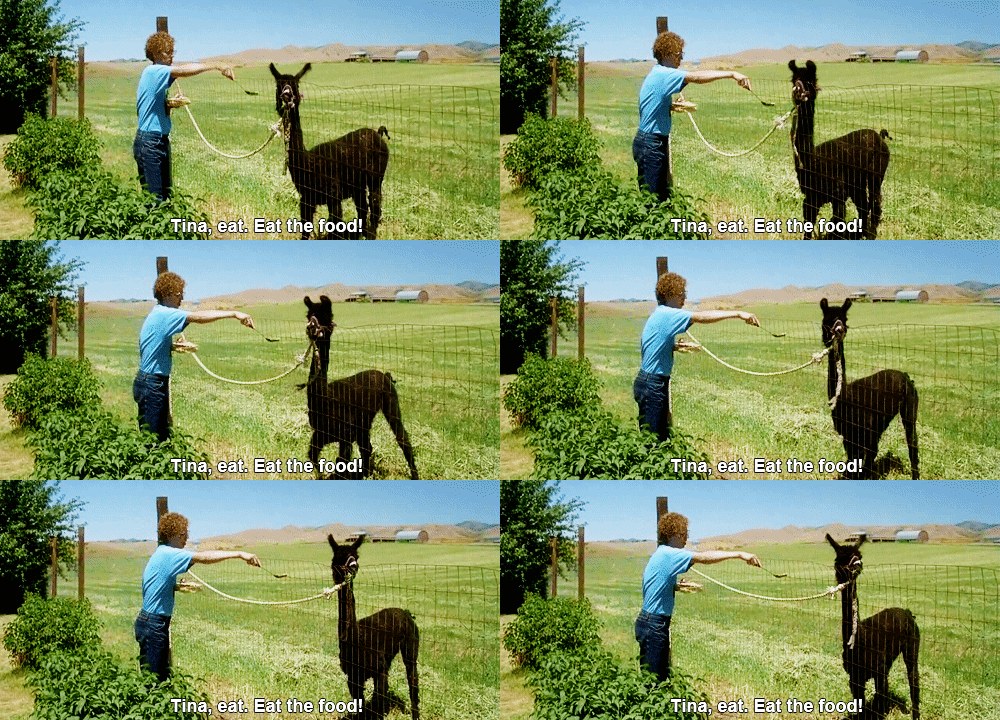
Film theorists Ernest Mathijs and Xavier Mendik in The Cult Film Reader (2008) identified four major ways to identify a text as a cult film; Anatomy, Consumption, Political Economy and Cultural Status. Within each of these categories are subcategories that discuss genre, nostalgia, reception and cultural sensitivities. Applying this to Napoleon Dynamite, it can be defined generically as a comedy and a coming of age story. However, the oddity of the story, characters and slow journey creates a new hybridity of the two genres. The comedy elements of the film can be seen as slapstick, with the humour coming from moments of foolishness, such as Uncle Rico attempting time travel using a device purchased online and Napoleon’s verbal abuse targeted at his overweight pet llama, Tina. Usually within cult film, there is not one defining genre, instead, a hybrid. Although this film only combines two genres, the style of the film as a result of the combination creates the same level of creativity and individuality as other cult films; it is an awkward and bizarre type of comedy in a narrative that follows mundane days in a small town where nothing ever happens.
One of the most interesting characteristics of the film is the mise-en-scene. Umberto Eco discussed the idea of a “completely furnished world” (1985, p.3). This idea creates a possibility for fans to quote the characters in the film, in their everyday; as if the film world is real. Napoleon’s world, especially in terms of mise-en-scene is entirely ‘fully furnished’. Humorously, despite the film being set in Napoleon’s 2004-2005 school year, the look of the film is iconic of the 1980’s. Napoleon’s home interior; dull beige tones with patterned sofas and outdated technology does not adhere to the 2000’s in any way. Similarly, the music in the film that serves as a continuing motif is made up of synth sounds that are reminiscent of 1980’s music. With this, Napoleon’s costume consists of ‘moon boots’ and iconic large gold rimmed glasses, similar to Rico’s costume which is overtly iconic of the 1980’s. Rico dwells on his opportunity to play football in 1982, suggesting his costume is reflective of his unwillingness to let go. The rest of the town’s 1980’s look can either be seen as a comment on the small-town mentality in which nothing progresses or can be seen as something arbitrary to add to the film’s charm.
The use of this time period and iconography creates a feeling of nostalgia for audiences which is often a part of cult appeal; “a core feature of many cult films is their ability to trigger a sense of nostalgia, a yearning for an idealized past” (Mathijs, Mendik, 2008, p.3). The feeling of nostalgia is created in this ‘furnished world’ and appeals not just to those audiences who lived in this time, but younger audiences wanting to experience an ‘idealized past’ – especially regarding intertextuality in the film iconic of the 1970s and 1980s. For those audiences watching in the time of its release, a generational connection was made; “its forever quotable dialogue acted as a unifying force for whatever elementary, middle or high school they might have been trudging through back in 2004.” (Huffington Post, 2014). The audience demographic can transcend over many generations.
In defining a cult film, looking at the stories from production and seeing the mistakes that are celebrated rather than condemned on screen is useful. Using the ideas of Umberto Eco once more, he uses the term ‘glorious ricketiness’ (1998, p.198) to describe the imperfections in cult film that make them ‘so bad, they are good’, “badness is as frequently approached ironically as it is carried as a sign of pride” (Mendik, Sexton, 2011, p.18). With such a low budget and a somewhat inexperienced film crew, mistakes can be seen both on screen and within editing, specifically continuity. There are instances where camera crew can be seen in reflections, and notably a scene where the date on Napoleon’s watch changes by four days in the space of a few minutes. Linking with the idea of ‘glorious ricketiness’, cult films will often have fascinating stories about its production. For example, the end of the film includes a scene in which Kip is getting married to LaFonda, a woman he met online. Filming in in the small town of Preston, Idaho, the actress who plays Kip’s bride, Shondrella Avery, had her real family cast as Jared Hess couldn’t find any African Americans locally to play the role due to lack of diverse ethnicity.

Continuity Error
Linking with the ideas of diverse ethnicity, Mathijs and Mendik discuss the prominence of the cultural sensitivities. Representation can often be problematic; however, this is an appeal for cult audiences. Mathijs and Mendik highlight that cult films often “walk a blurry line between exposing and capitalising on these sensitivities” which are frequently “the representations of animal cruelty, misogyny, non-western ethnicities, small town mentality” (2008, p.9). Looking at this idea in regards to Napoleon Dynamite, not only does this film adhere to the ‘small town mentality’ as discussed previously in regards to the 1980’s iconography, such issues arise in representing ‘non-western ethnicity’.
To show this, looking at the scene in which a promise of Pedro’s campaign for school president is the offer of protection from bullies. The audience see a bully harassing a student and Pedro’s cousins pull up abruptly to the kerb in an extremely stereotypical ‘lowrider’, wearing vests that show their tattoo covered skin. Interestingly, this is shot from a low angle, suggestive of their place in Preston’s society. They offer a threatening stare at the bully, who immediately runs away from fear, assuming their intent is violence. Their only role is to be a dangerous and threatening presence, granted the film is a light-hearted comedy, but this can still be seen as a problematic in terms of representation of an ethnic minority in a mainly Caucasian town.
“Personal recommendations are the most successful of all media promotions regardless of the amount of money spent on advertising” (Grant, n.d, p.17). This can be seen in the success of cult films due to the passion of fans. The active celebration of cult cinema is unlike any other, devotion to a text can be compared to religion or, insinuated in the name, a cult; “repeat audiences…who would often indulge in behaviours considered ritualistic” (Mathijs, Sexton, 2011, p.3). The celebration of Napoleon Dynamite boosted the success of the film in its release and long after. Even after a relatively unsuccessful animated spin-off, the original text remained popular. The state of Idaho adopted the film and from 2005 until 2008 a Napoleon Dynamite fest was held in which fans could take part in tater tot eating contests, tetherball competitions and moon boot dance contests, constructing a unique community. Similarly, fans still travel to Idaho to find the filming locations, to live in Napoleon’s world.

Linking back to Umberto Eco, he stated that “in order to transform a work into a cult object one must be able to unhinge it, to break it up or take it apart so that one then may remember only parts of it” (1985, p.4). This is applicable to Napoleon Dynamite; the dance scene is iconic and widespread even amongst people who may not be familiar with the film. This scene is the moment where Napoleon overcomes anxieties and performs in front of his peers, pivotal for both the character and narrative as it signifies a transformation. Additionally, with the ‘synth’ leitmotif, the tones are mirrored in Napoleon’s song choice, fusing the music used throughout with Napoleon’s character arc creating a seamless climax. This iconic scene has inspired much of today's pop culture; fourteen years after its release, costumes are still used in fancy dress and is often referenced to in film and various television shows such as Saturday Night Live (King, McGrath, 2007) and Gilmore Girls (Sherman-Palladino, 2006). The film is still screening in 2018 showing the active celebration that still exists.
The idea that “no film is naturally a cult film” is accurate; a film’s cult elements develop. A filmmaker does not often set out to create this type of film but as it is consumed by audiences, it is moulded and takes on different meanings by every individual. It is through the active celebration of fans, growing awareness of cultural sensitivities as society progresses and critics attempts to attack its imperfections that a text flourishes and becomes an adopted child of cult cinema.
